
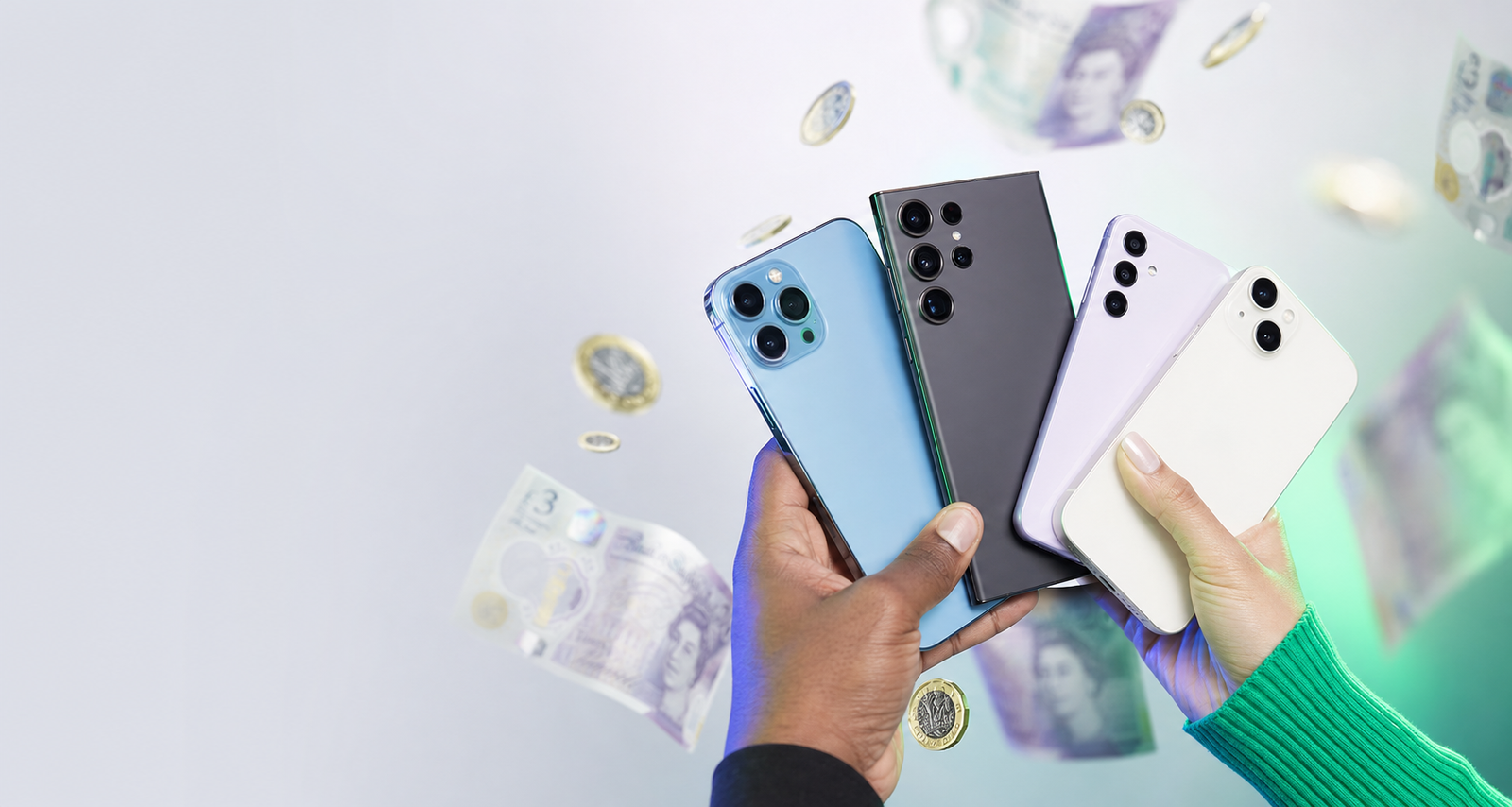
When the time comes to upgrade your phone, you have several options for getting rid of your old one. The three most common routes in the UK in 2026 are: trading it in through your network or retailer, listing it privately on a marketplace like eBay, or using a phone buyback service for instant cash. This honest comparison breaks down what each option actually means for you — in terms of money, time and effort.
Option 1: Network or Retailer Trade-In
How It Works
When you upgrade with your mobile network (EE, O2, Vodafone, Three) or a retailer like Currys or Apple, you can typically hand in your old phone as a “trade-in” towards the cost of your new device. The value is applied as credit against your new phone’s upfront cost or monthly bill.
The Pros
- Convenient — happens at the point of upgrade, no separate process required
- Immediate reduction in your new phone’s cost
The Cons
- You receive store credit, not cash — the value can only be spent with that specific retailer or network
- Values are typically lower — networks and retailers make a margin on trade-ins; their offered values are rarely market-leading
- Credit is often drip-fed — some networks apply trade-in credit across your monthly bills over 12–24 months, rather than as a single immediate reduction
- You’re locked into that retailer’s ecosystem — useful only if you’re definitely buying from them
Option 2: Private Sale on eBay or Facebook Marketplace
How It Works
You list your phone on eBay (auction or Buy It Now) or Facebook Marketplace. A buyer purchases it, you post it or hand it over locally, and receive the sale price minus fees.
The Pros
- Highest potential price — cutting out a middleman means you keep more of the resale value
- You receive actual cash (minus fees)
The Cons
- eBay fees — typically 12.8% + 30p per transaction on eBay, which meaningfully erodes your net proceeds
- Time and effort — photography, writing a detailed listing, answering buyer questions, packaging, posting
- Scam risk — phishing attempts, fake payment confirmations, “item not received” disputes are all common on consumer marketplaces
- Buyer returns — a buyer can open a dispute claiming the item is not as described, leaving you at risk of a forced refund
- Payment delay — eBay holds funds for new sellers; even for established sellers, payment arrives after the buyer confirms receipt
- No certainty — an auction may not achieve the price you hoped for; Buy It Now items can sit unsold for days or weeks
Option 3: Phone Buyback Service (e.g. sellmyphones.co.uk/)
How It Works
You visit a buyback site, enter your device details, receive an instant cash quote, post the device using a free insured label and receive payment — often the same day the device arrives.
The Pros
- Real cash — not store credit, actual money in your bank or PayPal
- Fast — most people receive payment within 2–3 business days of posting
- Hassle-free — no listing, no buyer questions, no packaging stress, no disputes
- Price certainty — you know exactly what you’ll receive before you post
- Broken phones accepted — buyback services typically accept faulty devices that private buyers won’t want
- Free insured postage — reputable services like sellmyphones.co.uk/ cover the cost and insure your device
- Price lock — a good service will lock your price for 14 days
The Cons
- Lower price than a successful private sale — you pay for the convenience; a buyback service needs to make margin on resale
- Requires accurate condition description — overstating condition can lead to a revised offer on arrival
Which Option Should You Choose?
The honest answer is: it depends on your priorities.
- If you want maximum money and don’t mind the effort and risk — private sale on eBay can net you more, particularly for high-value flagship phones.
- If you want fast cash with no hassle and certainty of payment — a buyback service is the best option for the vast majority of people.
- If you want convenience at the point of upgrade but aren’t focused on value — a network trade-in works fine, but you’ll almost certainly leave money on the table.
For most people selling phones in 2026, buyback services represent the sweet spot between value, speed and convenience — particularly when the buyback price gap versus eBay is narrowing as competition in the buyback market increases.
See how much cash your phone is worth right now. Free quote, no obligation, same-day payment.
How to judge the current value of your used phone
A useful valuation starts with facts that can be checked: the exact model, storage, condition and whether the phone functions normally. Market demand then determines how strongly those features translate into a current trade-in amount. This is why an old example price can become misleading even when the article itself remains useful. If you are making a decision today, use the live phone catalogue and choose the exact device rather than assuming a figure quoted for another storage or condition still applies.
Condition deserves particular attention because two identical models can have very different practical reuse costs. A clean display, reliable cameras and charging, normal buttons and a usable battery generally make a device easier to reuse. Cracks, functional faults, account locks or major housing damage can reduce that flexibility. The condition guide gives a consistent way to describe those differences before inspection.